Evidence
What Actually Counts as Evidence in Small-Claims Court
You do not need a lawyer's binder. You need the right four or five documents, arranged so a busy judge can follow your story in under five minutes.
By The CaseBySelf Team · 2026-06-10 · 7 min read
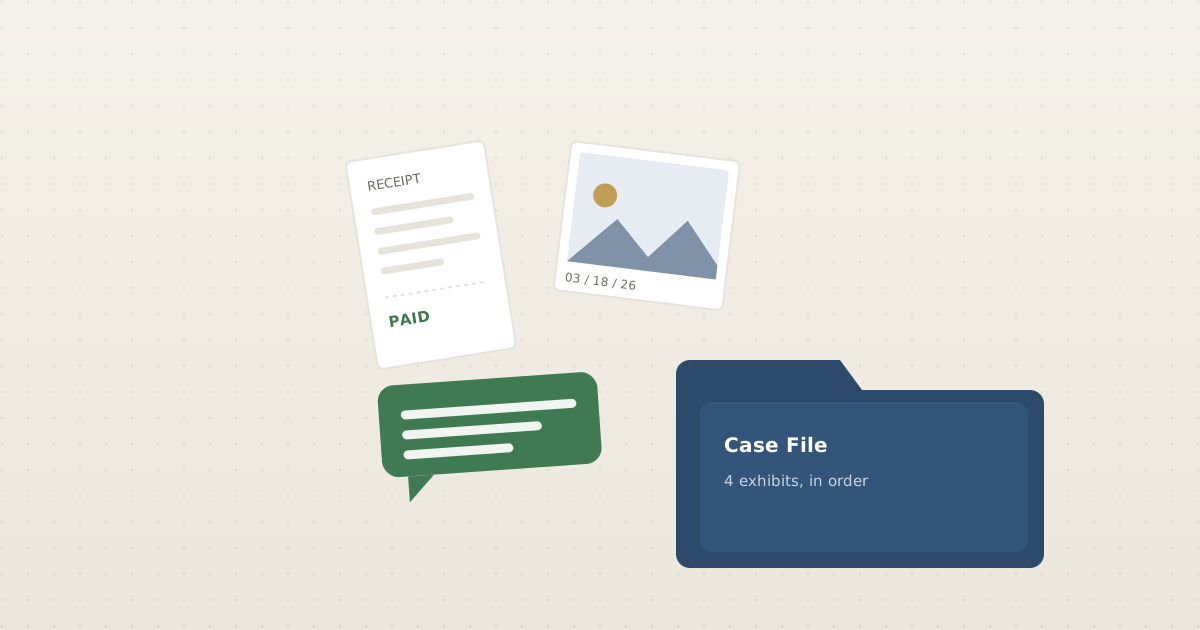
Most small-claims cases are not won by the better argument. They are won by the side that can show, on paper, that the thing they are describing actually happened. Evidence is just proof you can hand to the judge, and the good news is that the proof you need is almost always already on your phone or in a drawer.
The four workhorses
A surprising number of cases come down to some combination of four ordinary things: a contract or agreement, a record of payment, a record of communication, and proof of the loss. If you can produce those four, you have a real case.
- Agreement. A signed contract is ideal, but a quote, an invoice, an email confirming terms, or even a text saying "yes, $400 to fix the fence" can establish what was promised.
- Payment. Bank statements, canceled checks, a Venmo or Zelle history, or a credit-card record show that money actually moved.
- Communication. The back-and-forth that shows you asked for the work to be fixed or the money returned, and what the other side said.
- The loss. Photos of the damage, a second contractor's estimate to redo the job, or receipts for what you had to spend to make it right.
Texts and emails are evidence too
People assume only formal documents count. They are wrong. A screenshot of a text message where the other side admits the problem can be the single most powerful thing you bring. When you save messages, capture the whole thread, including the dates and the name or number of the person you were talking to. A screenshot with no context is easy to wave away.
The best evidence in a small-claims case is often the other side admitting, in their own words, that they owe you.
Photos, with dates
If your case involves damage, repairs, or a condition that changed over time, photos do enormous work. Take them from a few angles, and if your phone embeds the date, leave it on. A before-and-after pair is worth a paragraph of explanation.
What does not help
Three things tend to weaken a presentation rather than strengthen it. The first is volume: forty pages of printouts buries your three good ones. The second is opinion stated as fact: "they were rude and unprofessional" is not provable, but "they did not return four calls between March 3 and March 18" is. The third is secondhand accounts: what a friend told you someone else said carries little weight. Bring the person, or bring what they wrote.
Arrange it like a story
The single highest-value thing you can do is put your evidence in the order events happened, label each piece, and bring a copy for the judge and a copy for the other side. When the judge asks "and then what?", you want to be reaching for the next numbered page, not scrolling.