Disputes
Security Deposit Disputes: How to Get Your Money Back
Withheld deposits are one of the most common small-claims cases, and often one of the more straightforward, because many states put firm deadlines on the landlord.
By The CaseBySelf Team · 2026-04-16 · 7 min read
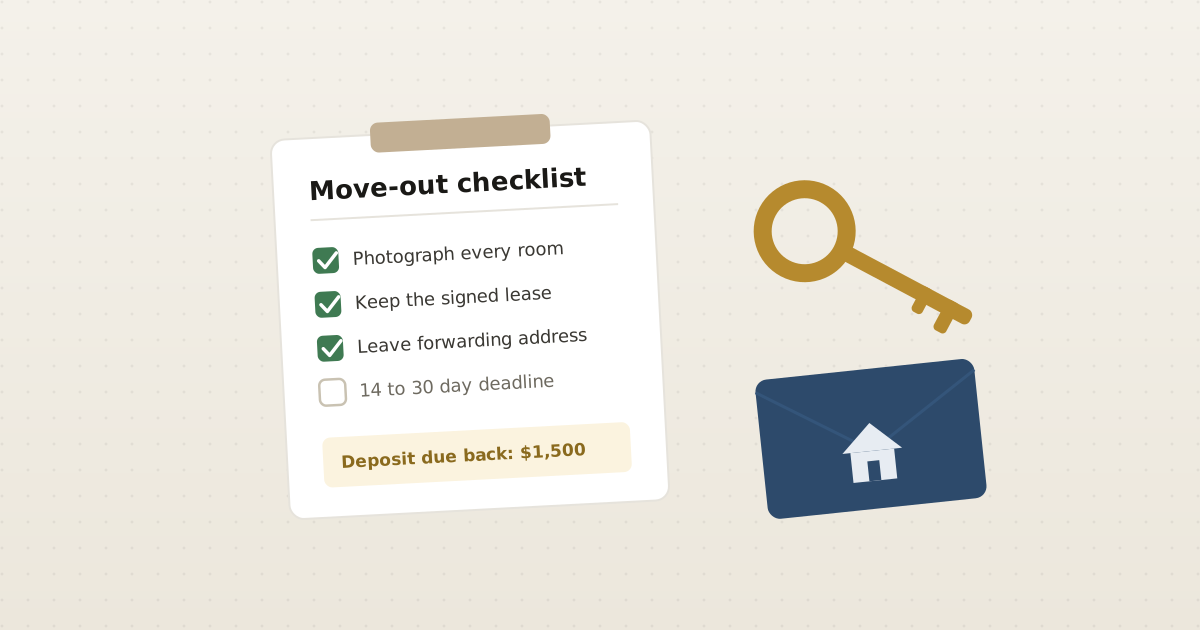
Few small-claims cases are as common as the withheld security deposit, and few are as well suited to a careful, organized tenant. The reason is structural: in most states the law sets firm rules about when a landlord must return your deposit and what they are allowed to deduct. When a landlord ignores those rules, they are not just keeping your money. They may be handing you a stronger case.
Know the deadline that protects you
Most states give landlords a specific window after you move out, commonly somewhere around 14 to 30 days, though the exact number varies by state, to either return your deposit or send an itemized list of deductions. Miss that window, and many states expose the landlord to a penalty. In some states that penalty can be two or three times the deposit, though it often depends on the landlord having acted in bad faith and the rules vary widely. Look up exactly what, if anything, your state provides.
What landlords can and cannot keep
Landlords may deduct for unpaid rent and for damage beyond normal wear and tear. They generally may not charge you for ordinary wear, the faded paint, the small nail holes, the worn carpet that simply comes from living somewhere. The line between damage and wear is where most of these cases are actually fought.
You do not owe your landlord a newer apartment than the one you rented.
Document the day you leave
The single best thing you can do happens before any dispute exists: photograph the entire unit on move-out day, after you have cleaned, with the date visible. Get every room, the floors, the appliances, the walls. This is the evidence that beats a vague deduction for "cleaning" or "damage" months later, when memories conveniently differ.
- Photograph every room after cleaning, with timestamps on.
- Keep your signed lease and any move-in condition checklist.
- Save the forwarding address you gave the landlord in writing.
- Hold on to receipts if you paid for professional cleaning or repairs.
Send the demand, then file
Write the landlord a dated letter: state the deposit amount, the date you moved out, the deadline they missed or the deductions you dispute, and the penalty your state allows. Ask for the money by a specific date. If they refuse or go silent, you file, and you bring the lease, the photos, the letter, and a copy of your state's deposit statute.
Why these cases land well
Deposit cases reward documentation, and in some states they come with a penalty written directly into the statute, which can mean a judge has less to guess at when it comes to your damages. When you walk in with dated move-out photos, a missed deadline, and the statute in hand, you are presenting a well-documented, well-organized case.