Filing
How to File a Small-Claims Case, Start to Finish
Small claims is built for people without lawyers. Here is the whole arc of a case, from the first form to the day you stand in front of a judge.
By The CaseBySelf Team · 2026-06-18 · 8 min read
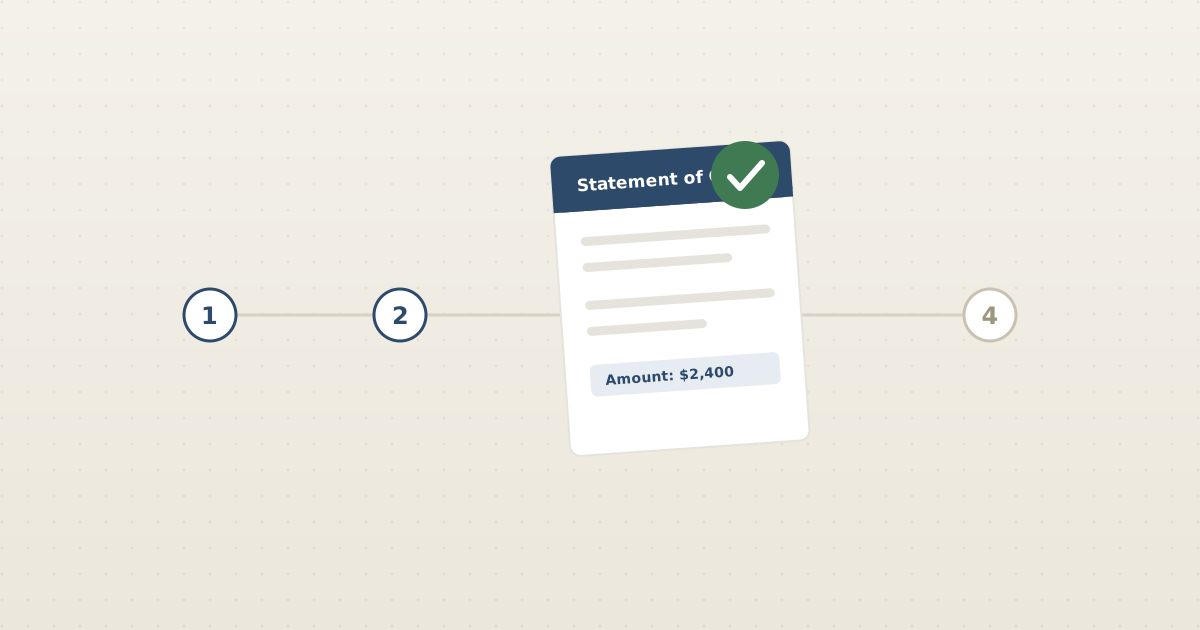
Small-claims court was designed for a specific person: someone who is owed money, does not have a lawyer, and does not want to hire one. The forms are short, the filing fees are low, and in most states the whole case is resolved in a single hearing that lasts a few minutes. None of that makes it effortless, but it does mean the process is learnable in an afternoon.
What follows is the full shape of a case. Your state will differ on names and numbers, but the sequence is fairly consistent across states.
1. Make sure small claims is the right room
Every state sets a dollar limit on small claims, usually somewhere between $2,500 and $20,000. If what you are owed is below that ceiling, you are likely in the right place. If it is far above, you may have to either sue in a higher court or agree to waive the excess in exchange for the simpler process.
Small claims is almost always for money. You generally cannot use it to force someone to do something, undo a contract, or settle a custody question. If you want a specific sum paid back, it fits. If you want anything else, check first.
2. Name the right defendant
This is the step people get wrong most often, and a wrong name can sink an otherwise strong case. You have to sue the actual legal entity that owes you. If you are suing a business, find out whether it is a sole proprietor, an LLC, or a corporation, and use its exact registered name. Most states let you search this for free through the Secretary of State's business registry.
3. File where the dispute belongs
Venue rules decide which courthouse hears your case. As a rule of thumb you can file where the defendant lives or does business, or where the events that caused the dispute happened. Filing in the wrong county does not always end your case, but it can get it transferred or dismissed, so it is worth a few minutes to confirm.
4. Fill out the complaint
The starting document goes by different names, a complaint, a statement of claim, an affidavit, a petition, but it always asks the same three things: who you are suing, how much you want, and a short statement of why. Keep the why factual and tight. You are not writing the argument yet, just telling the court what the case is about.
The complaint is a headline, not the article. One clear paragraph beats three pages of grievance.
5. Pay the fee and get your hearing date
Filing fees are modest, often around $30 to $100, and tend to scale with the size of your claim. If you cannot afford the fee, most states offer a fee waiver for low-income filers, so ask the clerk how yours works. When you file, the clerk gives you a case number and, in many states, a hearing date on the spot.
6. Serve the defendant
The other side has a constitutional right to be told they are being sued. "Service of process" is how you deliver that notice in a way the court recognizes, usually by certified mail, a sheriff, or a private process server. Service is not a formality you can skip. If you cannot prove the defendant was properly served, the judge usually cannot proceed, and will postpone or dismiss the case.
7. Build your file
Between filing and your hearing you will usually have a few weeks. Use them. Gather the contract, the receipts, the texts, the photos, the emails. Put them in the order the story happened. The litigant who walks in with a labeled, chronological file almost always looks more credible than the one shuffling through a phone.
8. Show up and tell the story
On the day, the judge will ask you to explain, briefly, what happened and why you are owed money. Lead with the facts in order, hand up your evidence when asked, and stop when you have made your point. Most small-claims hearings are over in well under fifteen minutes.
That is the whole arc. Each of these steps has its own pitfalls, and we cover several of them in their own articles, but the spine of every small-claims case is this same eight-step path.