Collecting
You Won. Now How Do You Actually Collect?
A judgment is permission to collect, not the money itself. The work that gets you paid often starts after the gavel.
By The CaseBySelf Team · 2026-05-04 · 7 min read
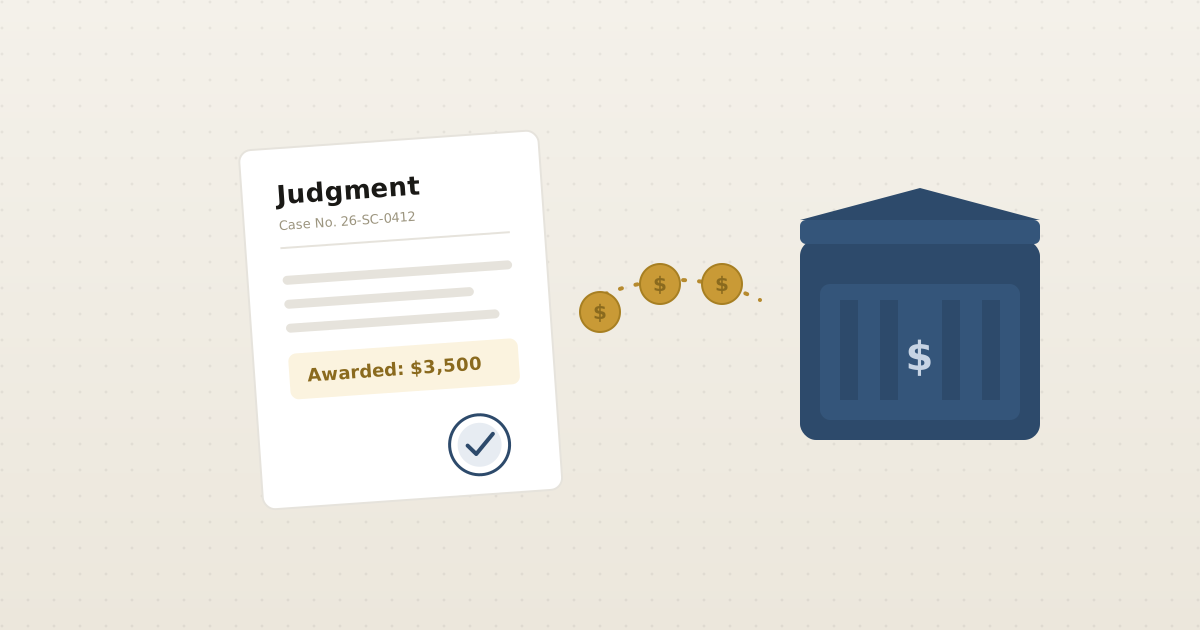
Many people walk out of small-claims court thinking the hard part is over. Often it is not. The court does not collect the money for you. A judgment is a legal finding that you are owed a specific sum, but it is permission to collect, not the payment itself. If the other side does not simply write a check, the next phase is on you, and it has its own tools.
First, just ask
Many defendants who lose will pay, especially once they understand that the alternatives are more expensive and more public. Send a short, businesslike letter stating the judgment amount, the case number, and how they can pay you. Give a deadline. A good number of judgments are resolved at exactly this step, with no further enforcement needed.
Find out what they have
If they ignore you, you need to know where the money is. Many states let you compel the debtor to answer questions about their finances, sometimes called a debtor's examination or order of examination. Under oath, they tell you where they bank and where they work. That information is the key that unlocks every collection tool that follows.
The three main tools
Which of these are available, and how they work, depends heavily on your state. Some states sharply limit or even prohibit wage garnishment for ordinary debts like these, so confirm what your state allows before you count on any one tool.
- Wage garnishment, where your state allows it. A court order directs the debtor's employer to send a portion of each paycheck to you until the judgment is paid. It can be steady and effective when the person has a regular job, but several states restrict or bar it for this kind of debt.
- Bank levy. With the debtor's bank information, the court can order the bank to freeze and turn over non-exempt funds in the account up to what you are owed.
- Property lien. You can place a lien on real estate the debtor owns, so that the judgment generally must be paid before they can sell or refinance. It is patient money, but it often gets paid in the end.
Most debtors pay once they realize you know how to reach their paycheck or their bank account.
Interest may be on your side
In many states a judgment accrues interest at a statutory rate until it is paid, though the rate and the rules vary, so check yours. Where it applies, time can work in your favor: a debtor who stalls may be watching the balance grow, which is itself a quiet pressure to settle.
Judgments usually last for years
If the debtor truly has nothing today, you are not necessarily out of luck forever. In many states a judgment stays valid for years, often somewhere in the range of five to ten, and can frequently be renewed, though the term and renewal rules vary by state. People change jobs, open accounts, and buy property. A judgment you keep on file is a claim you may be able to act on if their circumstances improve.